Materials of the North
Every Skandia knife is a convergence of three ancient materials: wood from the coldest forests, leather from the oldest tanneries, and steel forged in the tradition of Swedish masters.
Curly BirchBetula pendula var. carelica
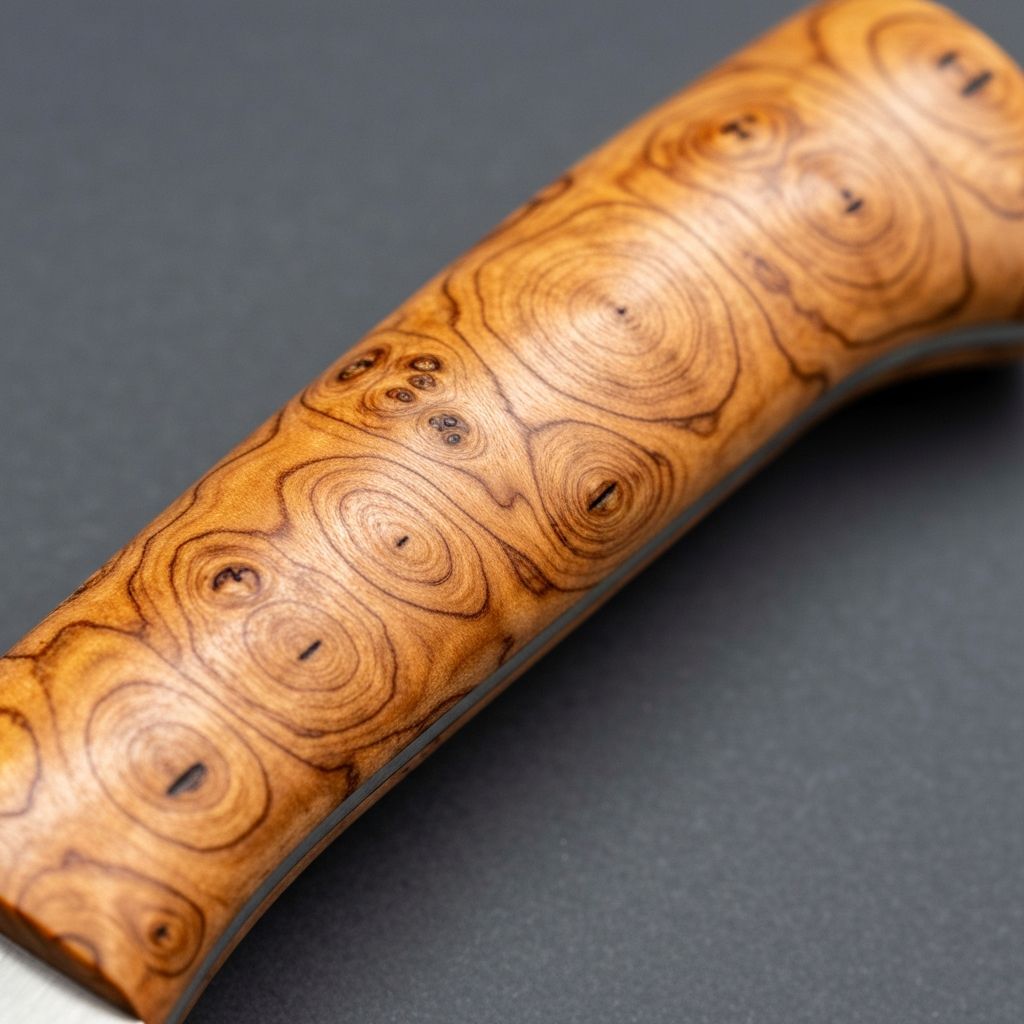
Sourced from the snowy forests of Karelia and Lapland, Curly Birch is the marble of the wood world. Its twisted, interlocking grain makes it incredibly tough and resistant to splitting.
No two handles are alike; your knife will have a unique fingerprint of swirls and flame-like patterns. This rare wood occurs in only 1-2% of birch trees, making each Skandia knife handle a piece of Nordic forest history.
Why Curly Birch for Knife Handles?
- •Extreme Durability: The interlocking grain structure prevents splitting even under extreme cold conditions (-40°C)
- •Natural Grip: The wood's texture provides excellent grip even when wet or frozen
- •Ages Beautifully: Develops a rich patina over years, deepening in color and character
- •Unique Patterns: Each handle features one-of-a-kind flame and curl patterns, making your knife truly individual
"The Sami people have used birch for tool handles for thousands of years. When you hold a Skandia knife with a Curly Birch handle, you're holding a piece of living Nordic tradition."
Harvest Region
Our Curly Birch comes exclusively from old-growth forests in Finnish Lapland and Russian Karelia, where harsh winters create the strongest wood fibers.
Rarity Factor
Only 1-2% of birch trees develop the curly figure. Master craftsmen select only premium-grade specimens with the most dramatic figuring for Skandia handles.
Finishing Process
Each handle is hand-shaped, sanded to 600 grit, and finished with natural linseed oil to enhance the grain while maintaining the wood's breathability.
Swedish High-Carbon SteelHRC 58-59
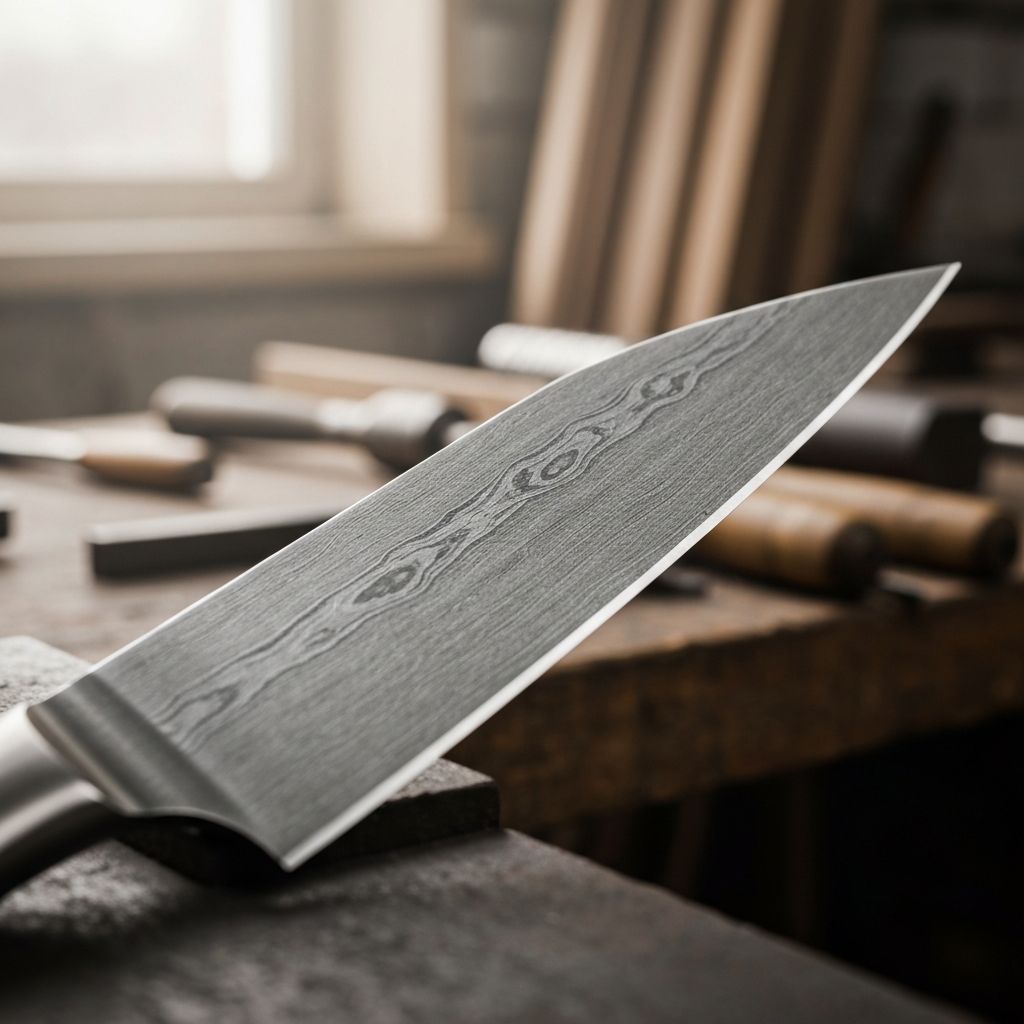
We forge our blades from high-carbon steel (approximately 0.8% - 1.0% Carbon). This steel offers a Rockwell Hardness (HRC) of 58-59, striking the perfect balance between holding a razor edge and being tough enough to withstand batoning without chipping.
Swedish steel has been legendary since the Viking Age. The iron ore from Sweden's northern mines contains minimal impurities, producing steel that is exceptionally pure and consistent. This is the same steel tradition that built Mora, Hultafors, and other legendary Scandinavian blade makers.
Why High-Carbon Steel?
- •Superior Edge Retention: Holds a sharp edge 3-4x longer than stainless steel in field conditions
- •Easy to Sharpen: Can be field-sharpened with a simple whetstone without specialized equipment
- •Impact Resistance: Won't chip or break under hard use like batoning or prying
- •Beautiful Patina: Develops a protective dark patina that tells the story of your adventures
"High-carbon steel is not stainless, and that's the point. It breathes, it ages, it becomes uniquely yours. This is the steel that survived the Arctic, the Taiga, and a thousand years of Nordic winters."
Vegetable-Tanned LeatherTraditional European Tanning
A Skandia knife is incomplete without its sheath. We use premium vegetable-tanned leather, cured using natural tannins from tree bark rather than harsh chemicals.
This traditional method—unchanged since medieval times—results in leather that breathes, smells like earth and pine, and molds perfectly to the shape of your knife over years of use. Each sheath develops its own character, darkening and softening with age.
Why Vegetable-Tanned Leather?
- •Natural & Sustainable: Made with oak and chestnut bark tannins—no toxic chromium salts
- •Molds to Your Knife: Forms a perfect custom fit over time, creating a retention sheath
- •Ages Beautifully: Develops rich brown and amber tones with exposure to sun and oils
- •Breathable Material: Won't trap moisture against the blade, preventing rust
- •Historic Authenticity: The same leather used for sheaths in Viking Age Scandinavia
"Modern chrome-tanned leather is fast and cheap. Vegetable-tanned leather is slow and forever. We choose the latter because we build knives that outlive their owners."
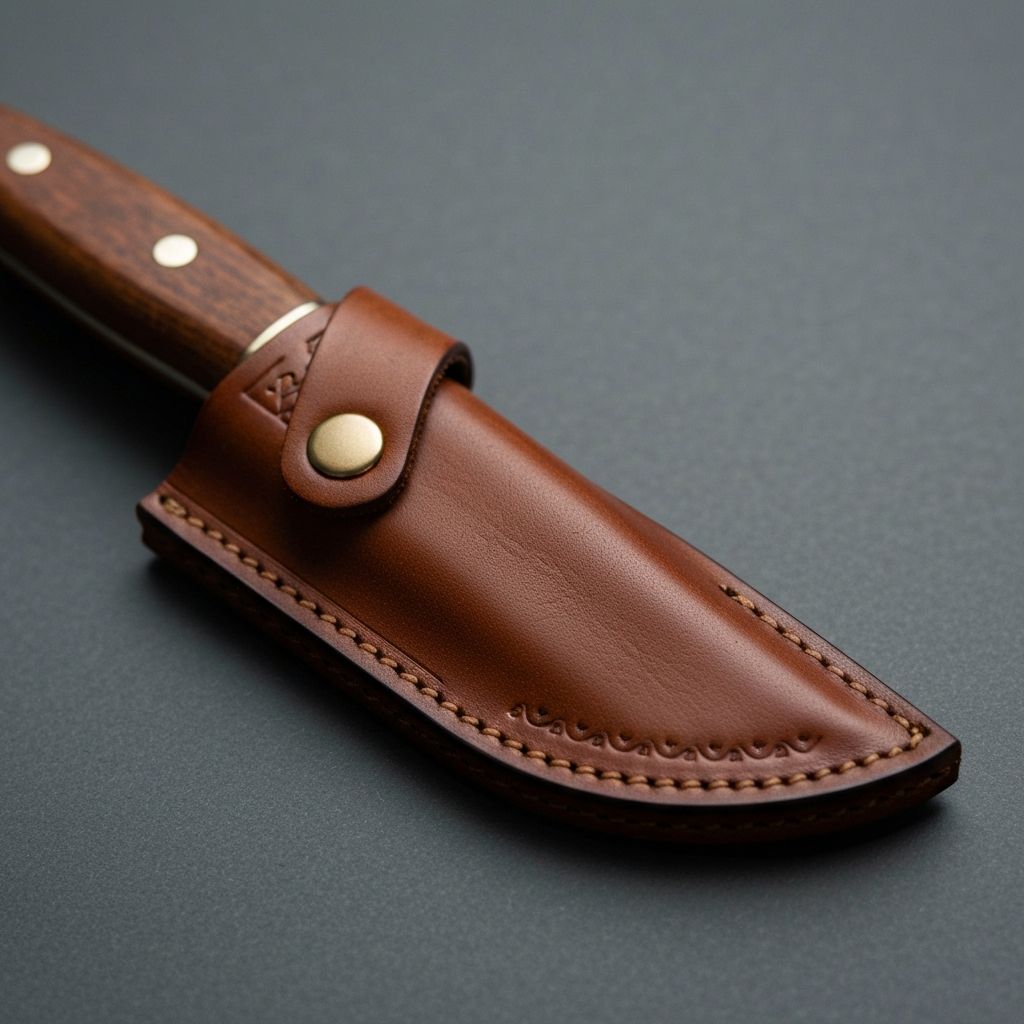
How Your Leather Sheath Will Age
Light tan color, stiff but workable, smells like fresh bark and workshop
Begins to darken, molds to blade shape, develops first wear marks at belt loop
Rich brown patina, perfectly fitted retention, smooth and supple texture
Deep chestnut color, tells your story through scars, becomes irreplaceable
Materials Questions Answered
Common questions about Curly Birch, Swedish high-carbon steel, and vegetable-tanned leather
Is Curly Birch better than Micarta or G10?
Curly Birch offers superior grip in wet and cold conditions compared to synthetic materials. While Micarta and G10 are virtually indestructible, they lack the natural warmth, beauty, and tactile feedback of wood. For traditional bushcraft and outdoor use in Nordic climates, Curly Birch is unmatched. It also ages beautifully, developing character over time rather than just wearing down.
Will high-carbon steel rust?
Yes, high-carbon steel will develop surface rust if neglected, but this is easily prevented with basic maintenance. After use, wipe the blade dry and apply a thin coat of oil. The steel will also develop a protective dark patina over time that actually helps prevent corrosion. This 'living' quality is what makes carbon steel superior for serious outdoor use—it can be maintained with simple tools in the field. Read our complete care guide.
Why not use stainless steel?
Stainless steel contains chromium for corrosion resistance, but this makes it harder to sharpen in the field and more prone to chipping under hard use. High-carbon steel holds a sharper edge longer and can be restored with a simple whetstone. For bushcraft, survival, and traditional woodwork, the trade-off is worth it. Our ancestors survived the Arctic with carbon steel—modern stainless is a convenience, not an upgrade. Learn about the Scandi grind advantage.
Can I replace the leather sheath?
Yes, vegetable-tanned leather sheaths can be re-oiled, re-stitched, or completely replaced. Unlike modern Kydex sheaths, leather can be repaired with basic tools and materials available anywhere. Many Skandia owners have sheaths that are decades old, darkened to near-black and molded perfectly to their specific knife. The sheath becomes part of your knife's story.
Do you offer reindeer antler handles?
Select limited-edition Skandia knives feature reindeer antler handles sourced ethically from Sami communities in northern Norway and Sweden. Antler is incredibly dense, grippy, and has been used for knife handles for over 10,000 years. These pieces are rare and typically available only through pre-order or seasonal releases.
Where exactly does the Curly Birch come from?
Our Curly Birch is sourced from old-growth forests in Finnish Lapland (north of the Arctic Circle) and Russian Karelia. The extreme cold and short growing seasons create incredibly dense wood with dramatic figuring. Each piece is hand-selected by master craftsmen who know which trees produce the best handle material.
Materials That Tell a Story
Every Skandia knife is built from materials that have served the North for centuries: wood that survived Arctic winters, steel forged in Swedish tradition, and leather tanned the way it was in medieval times.
Continue Reading