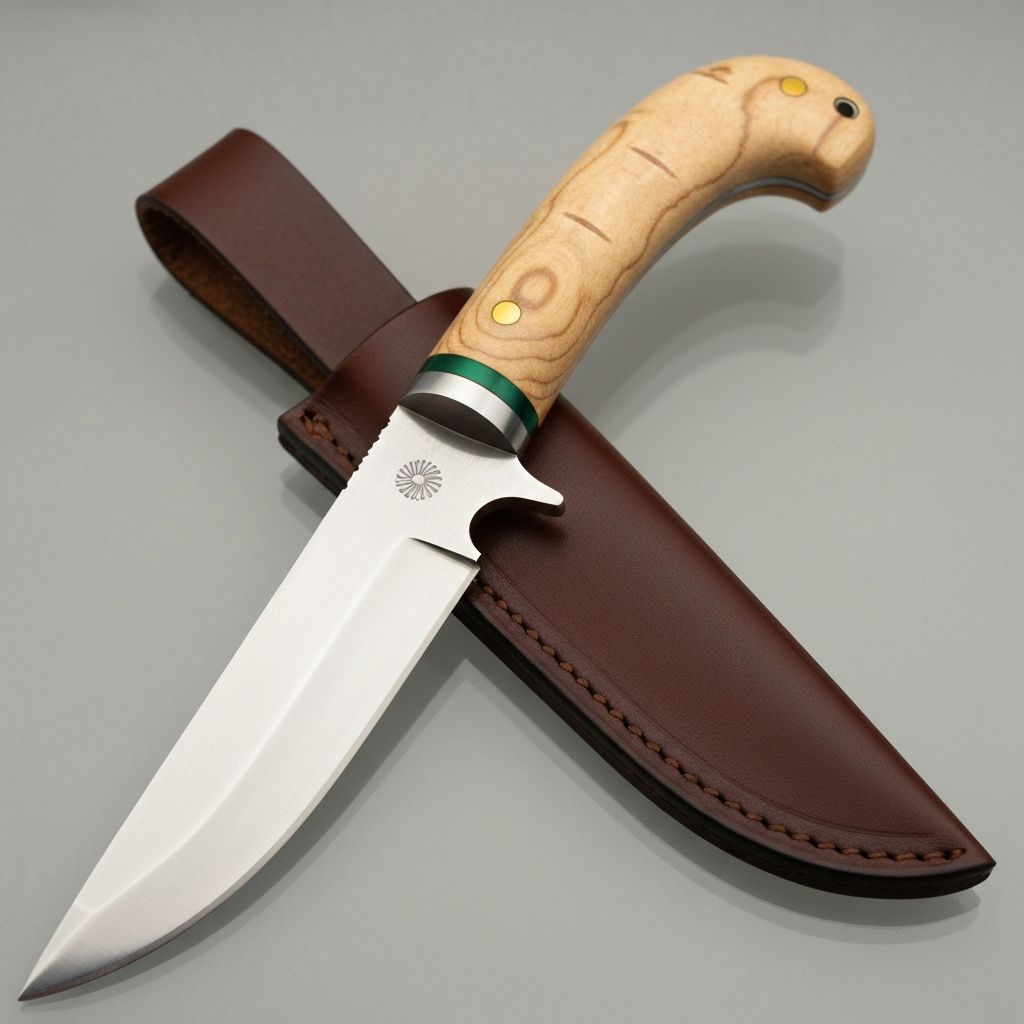
The Geometry of the North
Understanding the Scandinavian Grind: Why Simplicity Reigns Supreme in the Forest
Why the Scandi Grind Rules the Forest
In a world of complex compound bevels, micro-edges, and multi-angle grinds, the Scandinavian Grind (Scandi) stands out for its brutal simplicity. It is a single, wide bevel that runs from the middle of the blade directly to the edge—with zero secondary bevel.
This is not just another blade geometry. The Scandi grind represents centuries of Nordic wisdom distilled into one perfect angle. Where other grinds require guesswork, experience, and multiple steps, the Scandi grind teaches you how to use it. The blade itself becomes your guide.
For bushcrafters, woodworkers, and anyone who works with their hands in the wilderness, understanding the Scandi grind is understanding why generations of Scandinavian craftsmen chose this design above all others. It's not about tradition for tradition's sake—it's about function perfected over hundreds of years of real-world use in the harshest conditions on Earth.
The Three Pillars of Scandi Excellence
Why bushcrafters, carvers, and wilderness professionals choose the Scandi grind above all others
Woodwork Mastery
The wedge-like shape acts as a plane. When carving wood or making feather sticks for a fire, the bevel creates a natural guide, allowing you to control the depth of the cut with precision. The wide flat bevel registers against the wood surface, giving you tactile feedback that compound grinds simply cannot match.
- Perfect for feather stick preparation
- Superior control in wood carving
- Natural depth registration
- Ideal for making notches and joints
Extreme Sharpness
Because there is no 'micro-bevel' to increase friction, the edge is thinner and bites deeper into material. The zero grind geometry means less metal at the cutting edge, allowing for a more acute angle without sacrificing strength. This translates to effortless cuts through fibrous materials.
- Lower cutting friction
- Thinner edge geometry
- Deeper material penetration
- Less effort required per cut
Field Sharpening Simplicity
This is the easiest grind to sharpen in the wild. You don't need to guess the angle. Simply lay the wide flat bevel against your stone and push. The knife teaches you how to sharpen it. No guides, no mathematics, no uncertainty—just steel on stone at the angle that's already established.
- No angle guesswork needed
- Works with any flat sharpening surface
- Maintains consistent bevel
- Can be sharpened in minutes, even in the field
Scandi Grind vs Flat Grind: The Complete Comparison
Understanding different blade geometries and why the Scandi grind excels for bushcraft and wood carving
Scandi Grind
SKANDIA CHOICEThe purist's choice. One bevel, one angle, infinite possibilities. Born in the forests of Scandinavia where reliability and simplicity mean survival.
Flat Grind
Requires a secondary bevel for durability. While thin behind the edge, it demands more skill to sharpen consistently and lacks the natural registration of a Scandi.
Hollow Grind
Concave grind created by grinding wheels. Extremely sharp but fragile. Unsuitable for heavy bushcraft work and nearly impossible to properly sharpen without specialized equipment.
Convex Grind
Strong and durable with excellent edge retention. However, requires advanced sharpening skills and offers no tactile feedback for precision carving work.
The Verdict
While each grind has its place, the Scandi grind remains unmatched for wilderness work, wood carving, and bushcraft applications. Its combination of sharpness, control, and field maintainability makes it the professional's choice for serious outdoor use. The zero grind geometry isn't just a design choice—it's a philosophy of simplicity that has proven itself across generations of use in the harshest environments on Earth.
How to Sharpen a Scandi Grind: The Ultimate Field Guide
The Scandi grind's self-teaching nature makes it the most field-friendly blade geometry ever designed. No jigs, no guides, no protractors—just you, your knife, and a stone.
What you need: Any flat sharpening surface—a waterstone, diamond plate, ceramic rod, or even a smooth river stone will work. The Scandi grind is forgiving and adaptable.
Time required: 5-10 minutes for a field touch-up, 15-20 minutes for a full sharpening session. Compare this to compound grinds that can take 30-45 minutes and require multiple stones.
Skill level: Beginner-friendly. If you can maintain flat contact between two surfaces, you can sharpen a Scandi grind to razor sharpness. See our complete maintenance guide for more knife care tips.
Lay the Bevel Flat
Place the wide flat bevel of your Scandi grind knife against your sharpening stone. The entire bevel should make contact with the surface. You will feel it 'register' or 'lock' into place—this is the angle speaking to you.
Apply Pressure and Push
With consistent pressure, push the blade across the stone, moving away from your body. Maintain the flat contact between bevel and stone. The knife will maintain its own angle—you simply guide the motion.
Alternate Sides
After 10-15 strokes on one side, flip the knife and repeat on the other bevel. The beauty of the Scandi grind is that both sides have the same wide, flat surface. No guessing, no measuring, no doubt.
Test and Repeat
Check for a burr along the edge by carefully running your thumb perpendicular to the edge (from spine to edge, never along it). Once you feel a consistent burr on both sides, make a few lighter passes to remove it. Your knife is now razor sharp.
Pro Tip: The Sound Test
As you sharpen, listen to the sound of steel on stone. A consistent, smooth scraping sound means you're maintaining the correct angle. Any change in pitch or a 'rocking' sensation means you've lifted part of the bevel. Simply readjust and continue. The knife will guide you back to the correct position.
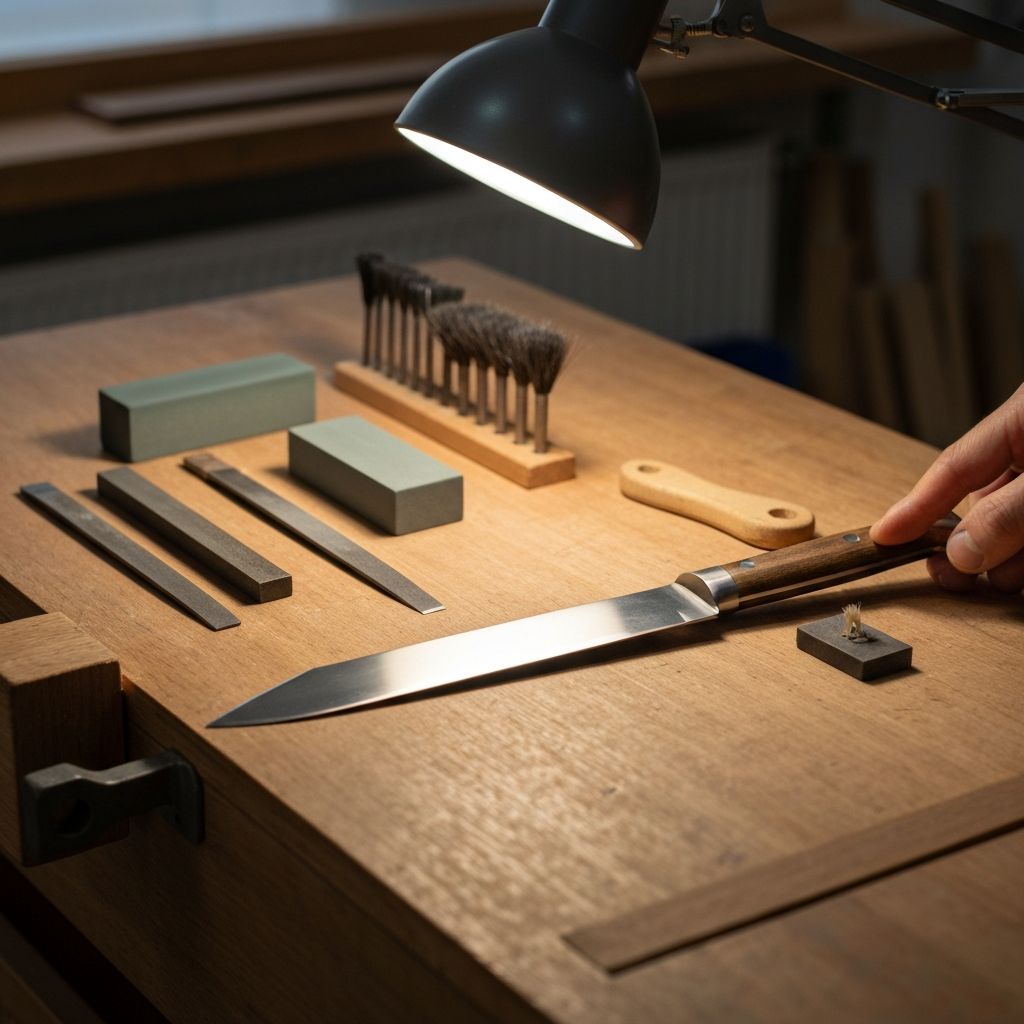
Traditional sharpening setup: minimal equipment, maximum results
Experience the Scandi Advantage
Every Skandia knife features the authentic Scandinavian grind—tested by generations of craftsmen, perfected for modern bushcraft and woodwork. No compromises. No secondary bevels. Just pure Nordic geometry.
Frequently Asked Questions
Is the Scandi grind only for wood carving?
While the Scandi grind excels at wood carving and bushcraft, it's highly versatile. It performs exceptionally well for food preparation, rope cutting, and general camp tasks. The only limitation is hard material cutting (bones, frozen wood), where a more robust grind might be preferred.
Can I convert my existing knife to a Scandi grind?
While technically possible, it requires significant material removal and precision grinding. It's far more practical to purchase a knife designed with a Scandi grind from the start, ensuring proper blade geometry and heat treatment are maintained.
How often should I sharpen my Scandi grind knife?
With proper use and care, a Scandi grind knife can maintain its edge for weeks of regular bushcraft work. A quick strop or light stone pass every few days will keep it razor-sharp. Full sharpening is typically needed only after extensive use or when the edge becomes damaged. Learn more in our care guide.